



Every host hits the same fork in the road a few days before a party. Down one path: a cart full of boxes from the freezer aisle and a calm afternoon. Down the other: a counter dusted with flour, a cutting board piled with stems and peels, and a long evening of assembly. Both paths end with a full table. They just draw on different accounts.
The useful question isn't whether homemade beats store-bought. It's which one suits this party, this budget, and this version of you on a Thursday night. Cost, time, and taste rarely point in the same direction, so it helps to know where each option genuinely wins.
Cost: The Per-Bite Math Is Sneakier Than It Looks
A box of frozen appetizers looks expensive on the shelf, but divide it by the number of pieces and it often lands in reasonable territory. The same goes for a supermarket cheese board: a wedge of cheddar, a log of goat cheese, a jar of olives, and a good baguette frequently cost less than making three dips from scratch with specialty ingredients.
Homemade flips the math when the recipe leans on pantry staples and you're cooking in volume. Eggs, flour, potatoes, canned beans, onions, and dried spices are cheap, and a batch of deviled eggs or a big pot of white bean dip stretches further than most packaged equivalents. Where homemade gets expensive is the recipe with six one-time ingredients: a jar of tahini you'll use twice, a tube of harissa, a package of prosciutto, a block of good parmesan. That's when store-bought wins on money, not just effort.
Two costs people forget: waste and time. A platter nobody touches is money in the bin, whether it was frozen or handmade. And a homemade item that freezes well — meatballs, mini quiches, sausage rolls — can be made in a double batch and pulled out for the next gathering, which quietly halves its cost per party. Grocery prices vary by region and store, so compare the actual per-piece cost where you shop before deciding.
Time: Hands-On Minutes Matter More Than Total Minutes
Store-bought isn't just faster; it's faster in a specific way. The work happens in one shopping trip, then it's finished. Homemade is scattered across prep, chilling, baking, and plating — and often the baking comes in batches because your oven fits one sheet pan at a time.
From experience rather than exact formulas: bacon-wrapped dates take about twenty minutes of hands-on work. Stuffed mushrooms run closer to half an hour. Anything wrapped in puff pastry, like sausage rolls or pinwheels, looks impressive and eats up an hour once you count chilling and slicing.
The trick that makes homemade survivable is spreading it out. Mix the filling on Wednesday. Roll and chill the dough on Thursday. Bake on Saturday afternoon. Splitting a recipe across three short sessions feels nothing like doing it all at once.
Watch Your Oven, Not Just Your Clock
Oven space is the constraint nobody plans for. If three appetizers all want 400°F for twenty minutes, one of them is going to sit on the counter getting cold. Store-bought items are flexible here, since many are served cold or at room temperature — olives, cheese, cured meats, marinated vegetables, good crackers. Build your menu so only one or two items need that hot oven window right before guests arrive.
Taste: Freshness Beats Packaging, With Clear Exceptions
Homemade wins wherever freshness is the whole point. Guacamole, bruschetta, deviled eggs, a warm spinach and artichoke dip, a bowl of whipped feta — these taste noticeably better made an hour before than scooped from a tub. You also control the salt, the heat, and the sweetness, which matters when you're cooking for a crowd with mixed preferences.
Store-bought wins where technique and equipment do the heavy lifting. Nobody makes phyllo at home, and frozen puff pastry is genuinely excellent. Good cured meats, aged cheese, olives, decent crackers, and bread from a real bakery beat what most home kitchens can produce on a Saturday. Fried items often hold up better from the freezer too: commercial freezing keeps them crisp, while homemade fried bites go soggy within the hour.
The honest middle: a homemade version of a simple thing beats the store-bought version almost every time, and a store-bought version of a difficult thing beats a stressed homemade attempt every time.
Guest Appeal: What Disappears From the Table
Guests don't audit your kitchen. They eat what looks easy to pick up and what's warm, which is worth remembering when you decide where to spend your effort. Variety does more for a table than any single showpiece — something crunchy, something creamy, something warm, something fresh keeps people grazing longer than four variations on cheese. Homemade also gives you the easiest path for mixed diets: a tray of vegetarian bites can sit alongside everything else without a label or a speech.
A Quick Way to Split the Menu
Run each candidate appetizer through these questions and the decision usually makes itself:
- Does it depend on freshness or crispness? Make it — guacamole, bruschetta, anything assembled at the last minute.
- Does it need laminated dough, curing, or long fermentation? Buy it.
- Will you have oven space in the final thirty minutes? If not, buy it or pick a cold item.
- Have you made it before? Party night is no time for a first attempt at a fussy recipe.
- Can it be made ahead and frozen? If yes, a double batch is free effort for your next party.
The Hybrid Approach Most Hosts Settle Into
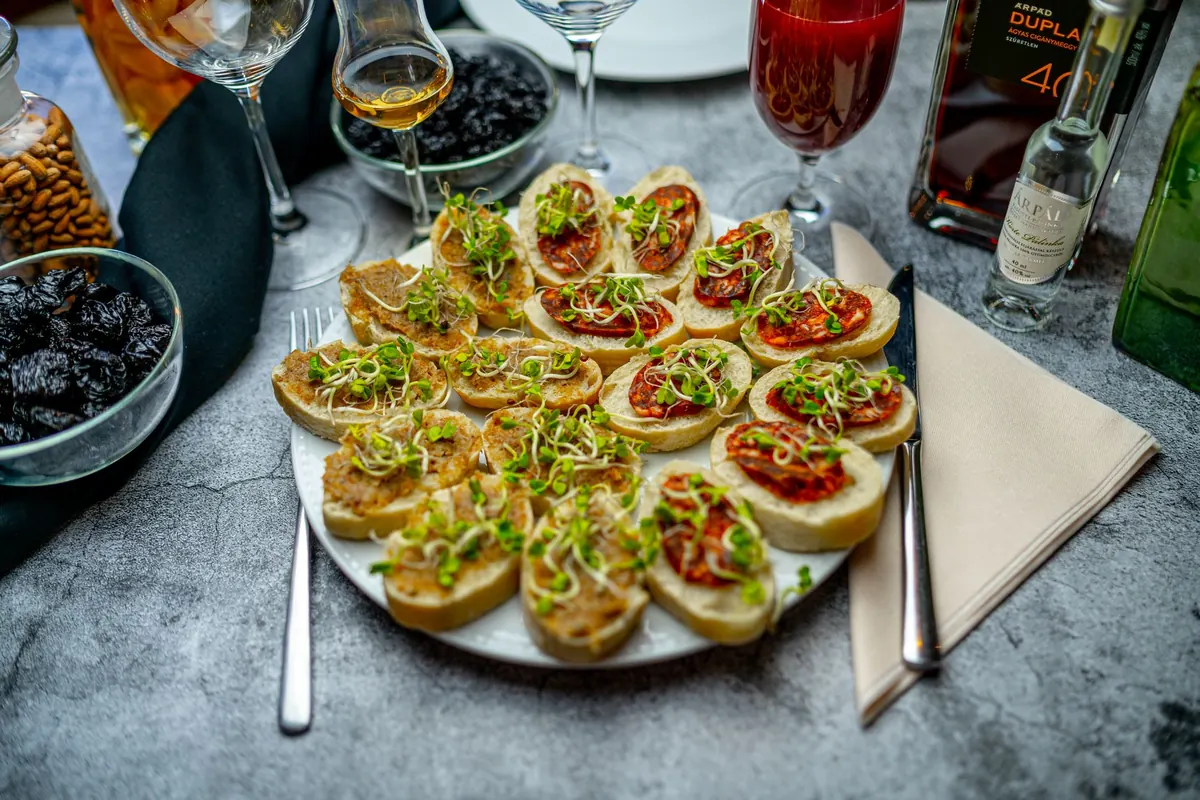
Buy the base, make the topping. Store-bought hummus becomes yours with a swirl of olive oil, toasted cumin, and crisp chickpeas. Frozen meatballs get a homemade glaze. Bought crostini get a fresh topping. A rotisserie chicken turns into shredded sliders. You cut the time in half and keep most of the flavor, and nobody can tell where the store ends and the kitchen begins.
Deciding for Your Next Party
Pick two homemade appetizers you've made before, one warm item that comes out of the oven as people arrive, and let store-bought cover the rest — the cheese, the olives, the crackers, the backup tray in the freezer. Write a timeline backward from your start time so the oven isn't a bottleneck. If you're watching your budget, compare per-piece costs before you commit; if anyone at the table has allergies or dietary restrictions, read packaged labels carefully, since ingredients and formulations change.
Done this way, the homemade-versus-store-bought question stops being a loyalty test. It becomes what it should be: a set of small, sensible trades that get good food onto the table while you're still able to enjoy your own party.
Photo: Kovacs Apor / Pexels