

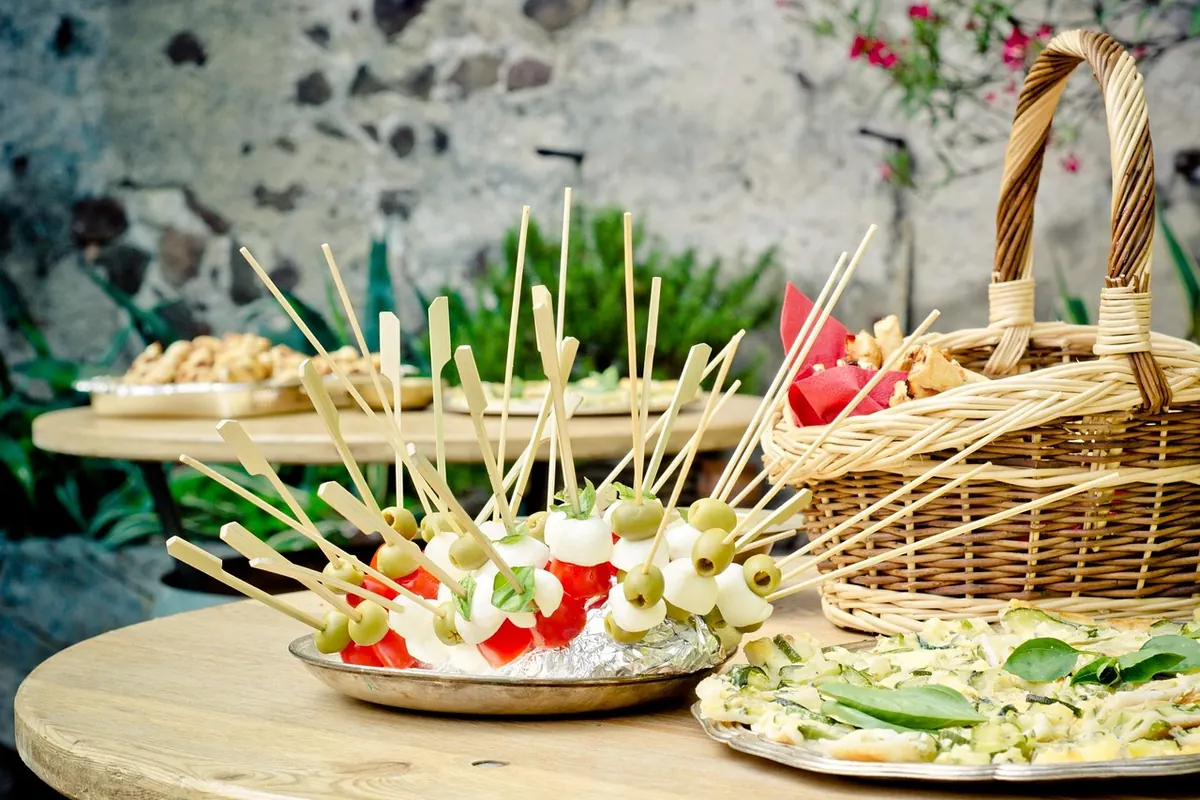
Twenty guests is the awkward middle. One cheese plate vanishes before the second round of drinks, and a full dinner is a different project with a different budget. An appetizer board solves it, but only if you build it with numbers in mind rather than vibes. The boards that actually feed a room — and still look generous at the end of the night — come down to three decisions: how much you buy, how the flavors balance, and how you arrange everything so people can reach the good stuff without knocking over the olives.
Start With the Math, Not the Menu
Before you think about a single cheese, decide what the board is doing. If guests are eating dinner afterward, plan six bites per person for a two-hour gathering. If the board is the food, plan ten to twelve, and treat that as a floor rather than a ceiling.
For 20 guests, that means roughly 120 bites as a prelude, or 200 to 240 if the board is dinner. Add a 20 percent cushion either way. Someone always brings a plus-one appetite, and an empty board at 8 p.m. is a worse problem than leftover cheddar.
The trick is counting bites, not ingredients. A slice of salami is a bite. One cracker with a smear of dip is a bite. One cube of cheese is a bite. A bowl of almonds and a pile of grapes are buffers — nobody counts them, but they fill the gaps when the prosciutto is gone.
For surface area, one board about 24 by 18 inches will hold enough for 20 people, though two smaller boards are easier to manage. A rimmed half-sheet pan works beautifully and slides into the fridge when you need to chill the whole thing.
Give Every Bite a Job
A board feels satisfying when it hits five notes. Skip one and people notice, even if they can't say why the spread felt flat.
- Salty and cured: prosciutto, salami, soppressata, olives, marinated artichokes, good pickles.
- Creamy: a soft cheese, hummus, whipped feta, labneh, a mustard or honey for drizzling.
- Crunchy: crackers, toasted baguette slices, breadsticks, nuts, seed clusters, radishes, snap peas.
- Bright: cherry tomatoes, grapes, citrus segments, quick-pickled onions, a squeeze of lemon over the vegetables.
- Sweet: dark chocolate, fig jam, dried apricots, a few honeycomb pieces.
Two or three cheeses is plenty. Pick one hard, one soft, and one that's a little unusual — a smoked gouda, a blue, a truffled pecorino. Three cheeses at that size give you variety without turning the board into a dairy display.
The Shopping List, Sized for 20
These are working quantities for a board that functions as the main event. Cut them by about a third if dinner follows.
- Cheese: 2½ to 3 pounds total, cut into bite-sized wedges rather than one solid block.
- Cured meat: about 2 pounds, loosely folded or ruffled so slices separate easily.
- Crackers and bread: 150 pieces. Two boxes of crackers plus two sliced baguettes gets you there.
- Dips: two dips, about 1½ cups each, in bowls set into the board.
- Vegetables: 3 to 4 pounds, cut into pieces someone can eat in one bite.
- Fruit: 2 pounds of grapes or berries, plus one sliced item like pears or melon.
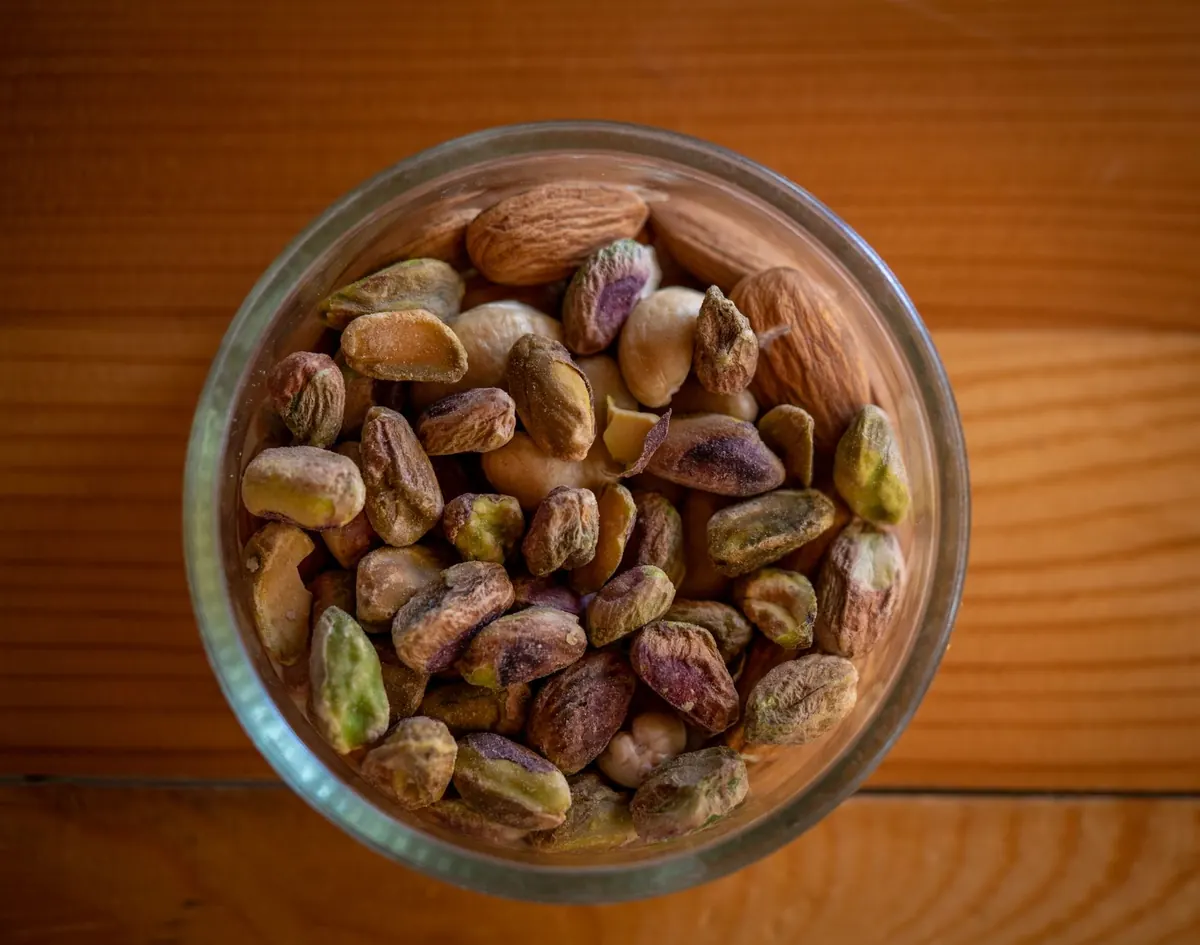
- Nuts and olives: 1½ cups nuts, 1 pint olives. Buy both, use both.
- Sweet finish: 8 ounces of chocolate broken into shards, plus a small jar of jam.
Prep in Three Passes
- The day before. Shop, wash and dry the vegetables, make any dip that improves overnight, and cut the hard cheese. Dry vegetables matter — wet cucumbers make crackers soggy.
- Two hours out. Slice baguettes, toast them if you like, and set out your boards and bowls so you can see the layout before you commit. Pull soft cheese from the fridge now; it tastes like almost nothing when it's cold.
- Fifteen minutes before. Fold the meat, fill the dip bowls, and arrange the perishable items. Leave the crackers in their boxes until the doorbell rings.
Arranging It So It Doesn't Look Sad
Anchor first, then fill
Place the largest items — a wedge of cheese, the dip bowls, a bunch of grapes — as anchors spaced across the board, then fill the space between them. If you build from one corner outward, you'll end up with a crowded half and a bare half.
Cluster, don't line up
Rows look tidy in photos and awkward in person, because the first person to take a slice of salami leaves a gap in the pattern. Groups of five or six overlapping pieces look abundant and survive being eaten from.
Build upward
Stack a few crackers on their edges, pile grapes into a small mound, tuck breadsticks standing in a jar. Height makes a modest amount of food look like more, and it gives the board a shape the eye can follow.
Leave breathing room
Guests need somewhere to set a glass, and you need somewhere to add refills. A board that's packed edge to edge has no room to be restocked without a full rebuild.
Handling 20 People in Real Life
Make two boards: one you put out at the start, one assembled and waiting in the fridge. When the first board dips below half, swap in the second rather than restocking — it takes ten seconds and looks like a fresh spread.
Keep cold items cold. Set cheese and dips over a shallow tray of ice if the party runs long, and don't leave perishable food at room temperature for more than about two hours. Ask about allergies when you send the invitation, and keep nuts in their own bowl so they're easy to avoid. If anyone in the group is managing a health condition or a restricted diet, they're the best judge of what they can eat — a labeled bowl or two is a kind gesture, not a medical plan.
Two small logistics details save the night: a bowl for olive pits and toothpicks, and a stack of small plates within arm's reach. People eat more when they aren't balancing three items in two hands.
The Last Ten Minutes Before the Doorbell
Fill the gaps, drizzle the honey, crack some black pepper over the vegetables, and step back. Then put out the crackers, take a photo if you want one, and stop rearranging. The board is supposed to look abundant, not perfect. Your job for the rest of the evening is to notice when it's half empty and swap in the one waiting in the fridge.
Photo: TheUjulala / Pixabay